Up to 28,000 Hours of Testing Proves Ultra-Low Degradation in GORE® PEM Water Electrolysis Membranes
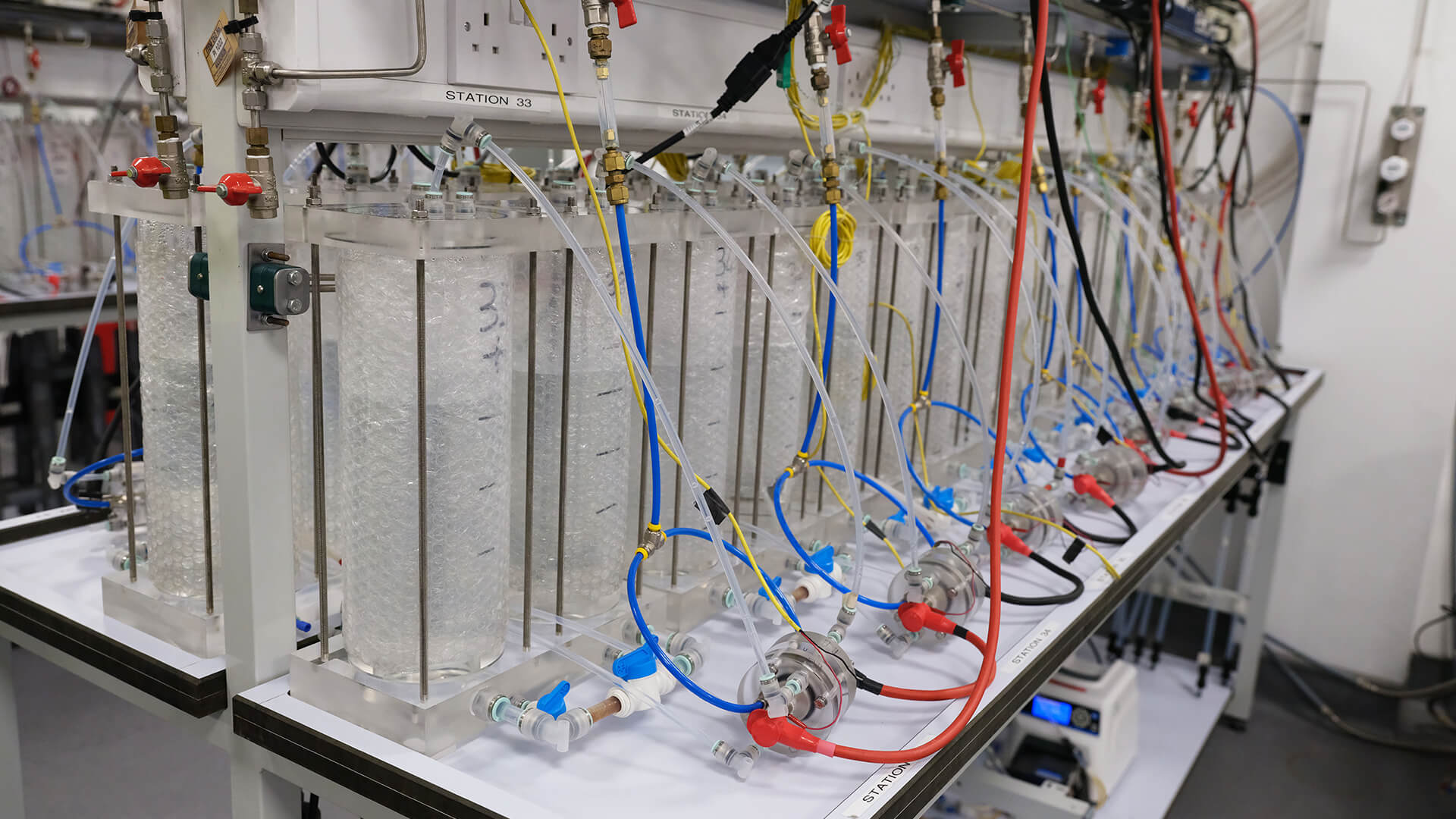
Proton Exchange Membrane Water Electrolysis (PEMWE) is a core technology for green hydrogen production, but the industry has lacked comprehensive, long-term durability data measured under application-relevant conditions. That gap is especially critical as the market moves toward thinner membranes, which deliver higher energy efficiency but are intrinsically more susceptible to gas crossover and related degradation.
To close that gap, W. L. Gore and ITM Power co-designed two innovative membrane and cell prototypes, then rigorously tested them under industry-relevant conditions — accumulating 28,000 hours on an 85 µm reinforced PEM (Concept 1) and 11,000 hours on a 50 µm reinforced PEM (Concept 2) at 20 bar differential pressure. Both prototypes meet or exceed 2030 DOE and EU performance targets for voltage decay, efficiency, and chemical stability. The 50 µm membrane further demonstrates remarkable gas purity, with hydrogen-in-oxygen crossover held below 0.4% — and a predicted longevity of approximately 80,000 hours.
By monitoring multiple KPIs in parallel — cell voltage, anodic hydrogen, fluoride release rate, and end-of-test SEM and permeation diagnostics — this study delivers mechanistic insight into membrane durability that goes well beyond any single parameter.




Download the full white paper for complete performance data and end-of-test diagnostics.
See how Gore’s ultra-thin reinforced PEM technology can lower LCOH, reduce stack downtime, and accelerate the scale-up of green hydrogen production.
FOR INDUSTRIAL USE ONLY
Not for use in food, drug, cosmetic or medical device manufacturing, processing, or packaging operations.